If you have ever searched for SPC flooring in the UAE, you have probably noticed something confusing the prices vary wildly. One product might cost half the price of another that looks almost identical. So what is actually going on?
The truth is, SPC flooring price in the UAE is not random. It is shaped by a set of very specific technical and logistical factors that most buyers never hear about. Understanding these factors will not only save you from overpaying it will help you choose a product that actually lasts.
In this guide, we break down the 7 real reasons why SPC flooring costs what it costs in the UAE, so you can make a confident, informed decision for your home or commercial project.
1.Wear Layer Thickness: The Most Important Factor
The wear layer is the transparent protective coating on top of your SPC floor. It is the part that takes all the daily punishment foot traffic, furniture movement, pet scratches, and cleaning. You can explore our full range of SPC and flooring options at City Furniture to see how wear layer thickness varies across our collection.City Furniture Carpets & Flooring
Wear layers are measured in millimeters. Here is what each level means for you:
0.2mm to 0.3mm: Entry-level budget products. Fine for very low-traffic rooms but will show scratches within 2 to 3 years under normal household use.
0.5mm (12 mil): The recommended minimum for UAE homes. Balances cost and durability for everyday residential use.
0.7mm (20 mil) and above: Commercial-grade. Ideal for high-footfall areas, rental properties, and spaces with pets or children
.
Why Wear Layer Matters More in the UAE
In the UAE’s climate, shoes are frequently worn indoors, and AC systems create slight temperature fluctuations that stress the floor surface over time. A thicker wear layer protects against both. A 0.7mm product typically lasts two to three times longer than a 0.3mm product, making it cheaper per year of use even if it costs more upfront.
2.Total Plank Thickness and What It Means for Your Floor
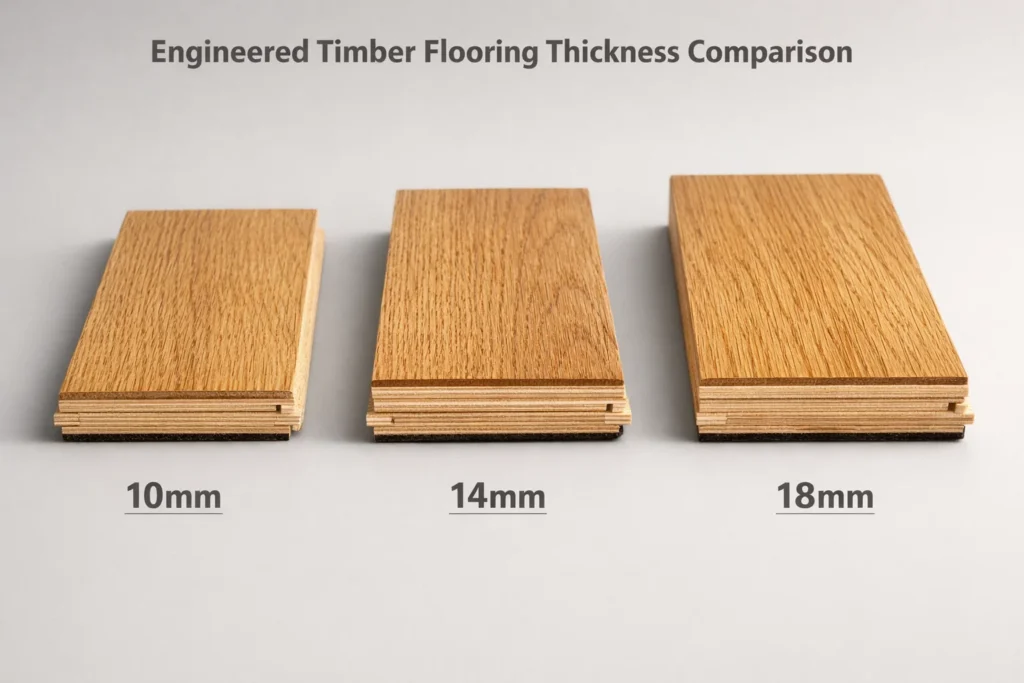
SPC flooring planks range from 3.5mm to 8mm in total thickness. Thicker planks are heavier, more rigid, and better at hiding minor subfloor imperfections all of which add to the manufacturing cost.
4mm to 5mm: Suitable for smooth, well-prepared subfloors in newer UAE apartments and builds.
6mm: The most popular choice in UAE residential projects. Good stability, comfortable underfoot, works in most situations.
7mm to 8mm: Best for older properties with uneven subfloors, commercial spaces, or premium residential installs.
Important: Account for Floor Height Increase
Thicker planks raise your floor level by 5mm to 8mm. This matters around doorframes, fitted furniture, kitchen units, and floor transitions. Always measure your clearances before selecting a thickness.
3.Brand Origin: Where the Product Is Made
A significant portion of SPC flooring sold in the UAE is manufactured in China, the world’s largest producer of rigid core flooring. However, not all products are equal, and European-branded products carry a price premium for good reasons.
Chinese factory-direct products offer the lowest cost per square meter and are perfectly suitable when purchased from a reputable supplier who independently quality-tests each batch.
European-branded SPC even when manufactured in Asia carries stricter QC standards, third-party certifications such as CE marking and EN 16511, and stronger warranty commitments, all reflected in the price.
UAE-assembled or locally branded products often sit in the middle range, combining imported raw materials with local quality checks and customer service.
Why Buying from a Trusted UAE Supplier Matters
When you buy from an established local supplier, you benefit from their direct factory relationships, independent QC checks, and local accountability. Learn more about City Furniture’s commitment to quality and why hundreds of UAE customers trust us for their flooring projects.
Always request the product’s FloorScore, GREENGUARD, or CE certification from your supplier. A certified lower-priced product is a far better choice than an uncertified premium one.
4.Underlayment: Attached or Separate?
Underlayment is the foam or IXPE padding layer between your SPC floor and the subfloor. It provides noise reduction, thermal insulation, and a softer feel underfoot.
Some SPC planks come with a pre-attached underlayment typically 1mm to 1.5mm of IXPE foam. Others are sold without it, requiring you to purchase and install underlayment separately, adding both material and labor cost
Why Underlayment Matters Extra in UAE Apartments
In UAE high-rise apartments, noise transmission between floors is a common concern for both residents and landlords. An attached high-density IXPE underlayment reduces impact sound significantly. It also buffers the floor from temperature changes caused by cold AC meeting warm ambient air which can cause minor plank expansion and contraction over time
5.Design Complexity and Surface Finish Quality
SPC flooring uses high-definition digital printing to replicate the look of wood, stone, and marble. The quality and complexity of this design layer directly affects cost.
- Standard designs: Basic photographic prints with minimal texture variation. Entry-level pricing.
- EIR (Embossed in Register): Surface texture is precisely matched to the printed grain pattern, creating genuine realism that looks and feels like real wood or stone. This technology adds cost but produces outstanding results.
- Large-format planks: Wider and longer boards require more precise manufacturing and generate more material waste per unit, increasing cost per square meter.
- Herringbone and chevron patterns: Require extra precision cutting during manufacturing, adding a premium over standard straight-lay planks.
Browse City Furniture’s SPC Flooring Designs
In 2026, matte finishes are the most popular choice across UAE residential and commercial projects. They hide dust, footprints, and minor scratches far better than gloss finishes a practical advantage in the UAE’s dusty climate. Browse our full SPC flooring collection in the City Furniture shop to explore the latest designs, textures, and formats available for delivery across the UAE.
6.Import Duties, Logistics, and Market Demand in the UAE
The UAE imports the vast majority of its SPC flooring from overseas. The journey from factory to your floor includes shipping, import duties, port clearance, local warehousing, and distributor margins all built into the final retail price.
Shipping route and distance: Products sourced from China face different freight costs than those shipped from Europe or Southeast Asia.
Import duties: The UAE applies a standard 5% customs duty on most building materials including flooring products, regardless of quality or brand.
Market demand cycles: During peak renovation seasons typically September to January in the UAE demand rises and prices can adjust accordingly.
Bulk purchasing power: Suppliers who import directly from factories in large volumes offer better per-unit pricing than smaller retailers buying through intermediaries.
How to Get Better Value on Import Costs
Purchasing from an established UAE supplier with direct factory relationships almost always gives you better value than buying through a general trading company that resells imported stock. Ask your supplier directly: ‘Do you import from the manufacturer or through a middleman?’ The answer will tell you a lot about the value you are receiving.
Installation Method and Project Size
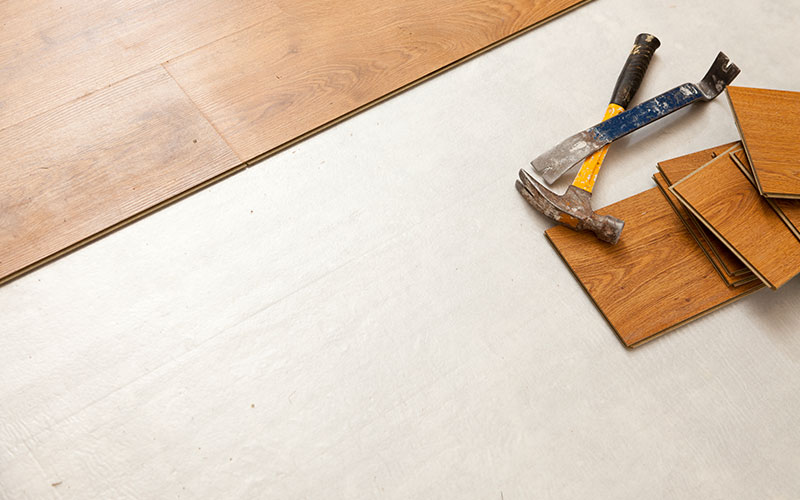
The final piece of the cost puzzle is installation. SPC flooring uses a click-lock system requiring no adhesive, making it one of the easiest floorings to install. However, installation costs in the UAE still vary significantly.
Project size: Larger rooms cost less per square meter to install because the installer spends proportionally less time cutting and fitting edges relative to total area covered.
Subfloor condition: An uneven, wet-damaged, or old-tile-covered subfloor requires preparation work before installation, adding time and cost.
Room complexity: Rooms with many angles, alcoves, pillars, or doorways require more cutting and fitting, increasing labor time.
Removal of existing flooring: If old tiles or carpet need to be removed and disposed of first, this adds to the overall project cost.
Always Get an Itemised Quote
Always request a detailed quotation that separates material cost from installation cost. This lets you compare suppliers accurately. A cheap material quote with an expensive installation package is not necessarily better value than a slightly higher material price with installation included.
Final Thoughts: What to Check Before You Buy SPC Flooring in the UAE
SPC flooring is one of the best flooring investments you can make in the UAE waterproof, durable, and perfectly suited to the local climate. But not all SPC products are created equal, and the price tag alone will not tell you the full story.
Before making your decision, always ask your supplier these four key questions:
What is the wear layer thickness of this product?
Does it carry FloorScore, GREENGUARD, or CE certification?
Is underlayment attached or sold separately?
What does the installation quote include, and what additional costs could apply?
Ready to find the right SPC flooring for your space? Contact our team at City Furniture UAE today for a free consultation and expert recommendation no guesswork, just the right floor for your specific project.
Frequently Asked Questions About SPC Flooring in the UAE
Is SPC flooring suitable for the UAE climate?
Yes. SPC flooring is one of the most suitable flooring types for the UAE. Its rigid stone-composite core is dimensionally stable, meaning it does not warp or buckle in the high heat and humidity common during UAE summer months. Unlike laminate or real wood, SPC flooring is 100% waterproof throughout its entire structure.
What wear layer thickness should I choose for a UAE home?
For standard residential use in UAE apartments or villas, a minimum 0.5mm (12 mil) wear layer is recommended. If you have pets, children, or high-traffic areas such as hallways and living rooms, a 0.7mm (20 mil) wear layer will provide significantly better scratch resistance and a longer lifespan.
How long does SPC flooring last in the UAE?
A well-chosen, properly installed SPC floor with a 0.5mm or thicker wear layer can last 15 to 25 years in a UAE home with normal use and basic maintenance. Commercial-grade SPC with a 0.7mm+ wear layer is designed for 20 years or more, even in high-traffic environments.
Can SPC flooring be installed over existing tiles in the UAE?
In most cases, yes. SPC flooring can be installed directly over existing tiles as a floating floor, provided the tiles are firmly fixed, level, and in good condition. This is one of the most popular installation methods in UAE renovation projects because it saves the cost and time of tile removal.
View our flooring services page to learn more about what is included in our professional installation service across Dubai and Abu Dhabi.